
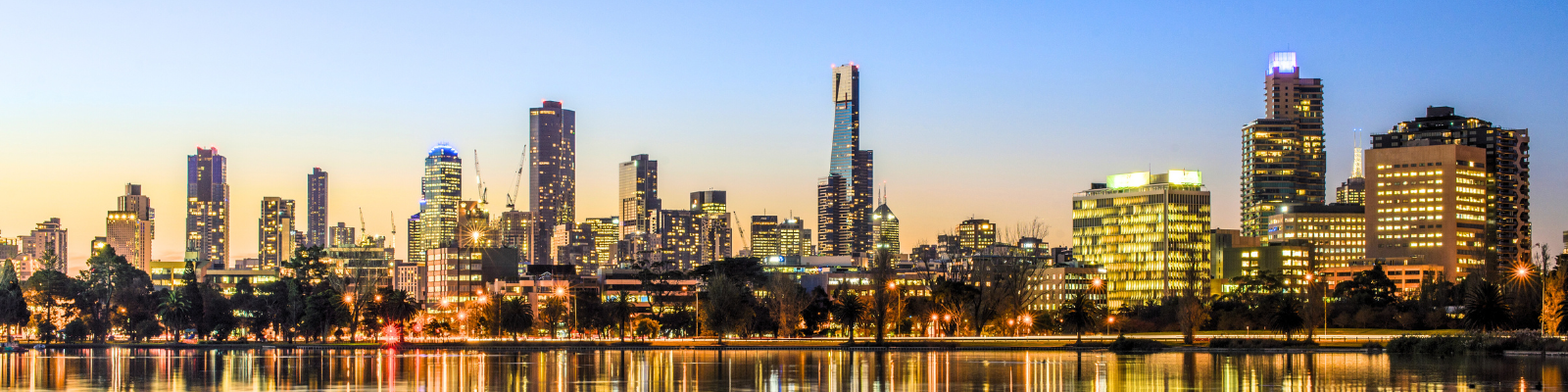
Partner Feature | Australia Design Review: The Australian design industry is at a crossroads – what happens next?
)
Architecture and interior design in Australia are operating in a climate of contradiction: demand exists, talent is moving, ambition remains high – but escalating costs, uncertain pipelines and a rapidly changing profession are forcing practices to rethink how they work.
There is a strange duality to the Australian architecture and interior design industry in 2026.
On one hand, there is plenty to be optimistic about. The appetite for design remains strong. Australian practices continue to produce work of international significance, from highly considered residential projects to major cultural, commercial and civic developments. New practices are emerging, established studios are evolving their models, and designers are increasingly operating across disciplines rather than within the traditional boundaries of architecture or interiors.
On the other hand, the business of doing design has rarely felt more complicated.
The latest data from the Association of Consulting Architects Australia (ACA) paints a particularly telling picture. Its 2026 Pulse Check, based on responses from 270 practices employing an estimated 5000 staff, found that 54 percent of practices had experienced a decline in revenue over the previous six months. At the same time, 28 percent reported growth. The result is not a straightforward downturn, but a widening divide between practices with strong pipelines and those struggling to secure work.
Perhaps most significantly, 72 percent of respondents identified cost escalation as a high or very high concern, making it the defining challenge for architectural practice in 2026. Regulatory complexity and delayed projects followed closely behind.
For designers, this creates a difficult equation: clients expect more from design, while the conditions in which design is delivered are becoming more constrained.
The pressure is real – but so is the opportunity
It would be easy to characterise the current moment as a crisis. But that risks missing what is arguably more interesting: the profession is changing.
The architecture and design jobs market, for example, has shown considerable momentum. Australian Design Review's recent reporting on the AU/NZ Architecture and Design Market Report found that 2026 began with the strongest jobs-market performance since the pandemic, with vacancies, applications and placements all increasing. Yet demand for talent is outstripping supply, creating new pressures around salaries, retention and the way practices compete for people.
This tension is likely to become one of the defining characteristics of the industry.
The old proposition – work hard, build your portfolio, become a senior designer, eventually become a director – is no longer enough. Younger designers are asking harder questions about what they want their careers to look like, how they want to work and whether the traditional model of practice is sustainable.
That is not necessarily a problem.
In fact, it may be one of the industry's greatest opportunities.
A profession that has historically prized long hours, hierarchy and a certain amount of professional mythology is being challenged to demonstrate that creativity and commercial sustainability can coexist. Leadership is becoming less about simply winning projects and more about building practices in which people can do their best work.
The question is whether the business models will evolve quickly enough.
AI is changing the conversation
Few developments have the potential to reshape practice as profoundly as artificial intelligence.
AI is already moving beyond the novelty of image generation. It is entering conversations around research, documentation, analysis, computational design, project management, specification and client communication. Australian practices are beginning to consider how data, automation and predictive tools can augment – rather than replace – professional expertise.
HDR's 2026 research into emerging trends in Australian architecture describes a future in which AI, computational design, real-time analytics and other technologies increasingly converge. But its most compelling proposition is perhaps that technology should enable architects to anticipate change rather than simply respond to it.
That distinction matters.
The most valuable designers of the future may not be those who can produce the most images in the shortest amount of time. They will be those who know which questions to ask, understand context and can make informed decisions about what should – and should not – be automated.
For interiors, the same principle applies. The proliferation of AI-generated imagery has made visualisation faster and more accessible, but it has also made the designer's point of view more important. When everyone can generate a beautiful interior in seconds, beauty alone becomes a poor differentiator.
Curiosity, material intelligence, cultural understanding, technical knowledge and the ability to create something genuinely specific to a client, place or community become more valuable.
In other words: as the tools become smarter, the thinking has to become better.

Sustainability is moving from aspiration to expectation
The sustainability conversation is also maturing.
For years, sustainability was frequently treated as a performance target or a collection of technical metrics. Increasingly, it is becoming inseparable from questions of longevity, adaptability, materiality and social value.
Adaptive reuse is an obvious example. The decision to retain, repair and transform an existing building is no longer simply an aesthetic choice. It can reduce waste, preserve embodied carbon and heritage, and allow cities to respond to changing patterns of use. HDR identifies adaptive reuse as an increasingly important strategy for urban regeneration.
The same thinking is beginning to influence interiors.
The industry is moving away from the idea that sustainability can be solved through a specification checklist. Designers are thinking more seriously about where materials come from, how long they will last, whether they can be repaired, what happens when a tenancy changes and whether an interior can evolve rather than be discarded.
That is a profound shift.
It also presents an opportunity for Australian designers to lead. Our comparatively young built environment, diverse climate and strong craft and manufacturing cultures provide fertile ground for experimentation with adaptive, durable and locally responsive design.
The return of the human
Perhaps the most interesting development, however, is not technological at all.
It is human.
After several years dominated by disruption, hybrid working, economic uncertainty and digital acceleration, there is a growing desire for spaces that provide connection, comfort and a sense of belonging.
In workplaces, this means moving beyond the simplistic debate about whether people should work from home or return to the office. The more useful question is: what is an office today?
Major projects such as Atlassian Central in Sydney demonstrate the scale of investment being made in workplaces designed around collaboration, social interaction and flexibility rather than rows of desks.
In interiors, there is a parallel movement towards tactility, craft, individuality and spaces that feel less prescribed. The current appetite for analogue experiences, natural materials and a stronger connection to nature reflects a broader desire to make environments feel restorative rather than relentlessly efficient.
This is an important reminder that design's value cannot always be measured in square metres, productivity metrics or return on investment.
Sometimes the value is simply that a space makes people want to stay.

The profession needs to become louder
There is another issue that cannot be ignored: advocacy.
Architects and interior designers are increasingly being asked to solve problems that extend well beyond aesthetics. Housing affordability, density, climate resilience, accessibility, ageing populations, workplace change and social inequality are all design questions – or at least questions in which design has an important role to play.
Yet the industry does not always communicate this value particularly well.
There is an opportunity now to become more vocal about what design contributes to Australian society. Not through self-congratulation, but through evidence, storytelling and participation in public debate.
This is particularly important for interior design, which continues to fight for recognition as a discipline with genuine technical, social and strategic value.
So, where does that leave us?
The Australian architecture and interior design industry is not in one place.
Some practices are thriving. Others are under significant pressure. Some sectors are booming while others remain subdued. Recruitment is competitive in some areas and painfully difficult in others. Technology is creating enormous opportunities while simultaneously challenging established business models.
That complexity is perhaps the most accurate description of the current state of the industry.
What is clear is that the old model of practice is being tested.
The studios that succeed over the coming decade may not necessarily be the biggest. They will be the ones capable of adapting – financially, technologically and culturally. They will understand that retaining talent is as important as winning work, that sustainability is integral rather than optional, and that AI is a tool rather than a substitute for judgement.
Most importantly, they will recognise that design's greatest asset remains the same as it has always been: people who are curious enough to question the status quo and skilled enough to imagine something better.
For Australian architecture and interior design, 2026 is therefore less a moment of reckoning than a moment of transition.
The industry has some difficult problems to solve. But it also has an extraordinary opportunity to redefine what a successful design practice looks like – and, in doing so, to redefine the value of design itself.
Visit australiandesignreview.com